
Generator Installation in Fort Myers, FL
Be ready for hurricane season with backup power your home can count on.
Get a Free Estimate View Our Services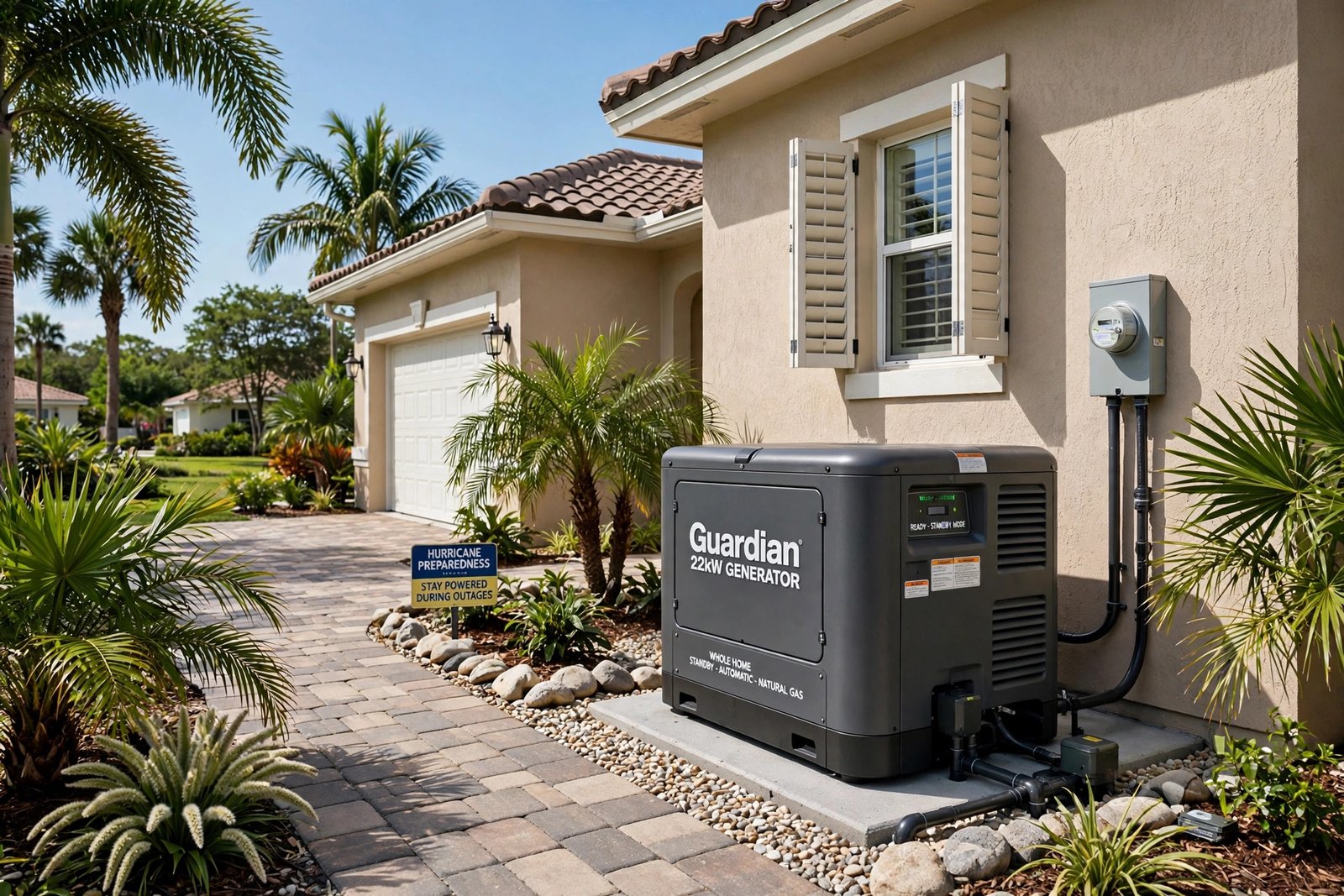
For generator installation Fort Myers homeowners plan ahead for, timing matters. In Southwest Florida, losing power is not a question of if, but when — and for how long. Hurricane season brings high winds, flooding and storm surge that can knock out electricity for days, and even an ordinary summer thunderstorm can leave a Fort Myers neighborhood dark for hours. When the power goes out, the air conditioner stops in Florida heat, the refrigerator starts warming, phones die, and medical devices, sump pumps and home offices are left without support. A properly installed home generator changes that picture. Kashu Electrician installs whole-home standby and portable generator connections in Fort Myers, FL, sized to your home and installed safely to code, so the next outage becomes an inconvenience instead of an emergency.
Whole-Home Standby Generators
A standby generator is permanently installed outside your home, similar to an air conditioning unit, and runs on natural gas or propane. It watches your utility power around the clock. When the grid fails, it starts automatically within seconds and an automatic transfer switch moves your home onto generator power — you do not need to be home, awake, or even in town for it to protect your house. Depending on how it is sized, a standby system can run the essentials you choose, or carry most of the home including air conditioning. For Fort Myers homeowners who travel, care for family members with medical equipment, work from home, or simply refuse to sweat through another multi-day outage, a standby generator is the most complete and hands-off form of backup power, and it is ready before hurricane season instead of during it.
Portable Generators with Inlet and Interlock
A portable generator costs less and can still power the essentials, but only if it is connected safely. Running extension cords through a cracked window is inconvenient and risky, and backfeeding a panel through a dryer outlet is genuinely dangerous for your family and for utility crews. The safe approach we install is a generator inlet box on the outside of the home with a mechanical interlock on the panel. You roll the portable unit outside, plug one heavy cord into the inlet, start the generator, and flip the interlock — your panel is fed by the generator while being physically prevented from sending power back to the grid. You choose which circuits matter: refrigerator, lights, fans, well or sump pump and a small window air conditioner, for example. It is a practical, budget-friendly way to be ready for storm season without a permanent standby unit.
Sizing Basics: What Do You Need to Run?
Generator sizing starts with a list, not a guess. During our assessment we walk through what you want running during an outage: air conditioning is usually the largest load and drives system size, followed by the refrigerator, freezer, water heater, well pump, medical devices, lights and outlets for phones and laptops. Whole-home standby systems are chosen to carry either selected essential circuits through a managed sub-panel arrangement or a larger share of the home with load management that briefly sheds heavy loads so nothing is overloaded. Portable setups are sized in running watts with headroom for the surge when motors start. We will explain the trade-offs plainly — bigger is not automatically better — and recommend the size that covers your real list without paying for capacity you will never use.
Our Generator Installation Fort Myers Process
Every project begins with an assessment of your panel, service size, fuel options and the best placement for the equipment. We provide an upfront quote covering the electrical scope, then handle the installation in a planned sequence: setting the generator or inlet location, installing the transfer switch or interlock, running and protecting the wiring, labeling circuits, and testing the complete system under load so we know it works before the first storm does. Work is performed to Florida code, with permit and inspection coordination handled as part of the project where required. Before we leave, we walk you through starting, stopping and safely operating everything, and what routine exercise and maintenance the manufacturer recommends.
Generator Safety Essentials
Generators produce carbon monoxide, an odorless gas that can be fatal, so placement and operation rules are not optional. Portable generators must always run outdoors, well away from windows, doors and garage openings — never inside a garage, even with the door open. Standby units are positioned to code clearances from the home and openings for the same reason. Fuel must be stored safely, hot engines must cool before refueling, and transfer equipment must always separate generator power from the utility grid. If any part of an existing generator setup looks improvised — cords through walls, a panel that can be backfed, or a unit stored next to a bedroom window — have it corrected before storm season. Pairing backup power with whole-home surge protection also helps protect your electronics when utility power returns.
Service Areas
Kashu Electrician installs generators in Fort Myers, Cape Coral, Lehigh Acres, North Fort Myers, Estero and Bonita Springs.
Frequently Asked Questions
Standby or portable — which is right for my home?
Standby systems start automatically and can carry large loads like air conditioning, which suits frequent travelers and medical needs. A portable with an inlet and interlock costs less and covers essentials well if you are home to start it. We will compare both against your outage list and budget honestly.
Can a generator run my air conditioner?
Yes, with correct sizing. Air conditioning is usually the largest single load, so it drives generator capacity and may be handled with load management that briefly pauses other heavy loads while the AC starts. We calculate this during the assessment rather than guessing.
When should I install — before or during hurricane season?
Before. Equipment availability and schedules are far better ahead of the season, and installation involves placement, electrical work and inspection that should never be rushed with a storm approaching. Booking early also leaves time to test the system under load.
Related Services
Whole-Home Surge Protection
When utility power returns after an outage it can surge. Panel-level protection guards your home and electronics.
Learn MoreElectrical Panel Upgrades
Generator hookups and transfer equipment depend on a safe, modern panel with the right capacity.
Learn MoreEmergency Electrician
Storm damage or a sudden outage problem? Our emergency team helps Fort Myers homeowners 24/7.
Learn More